

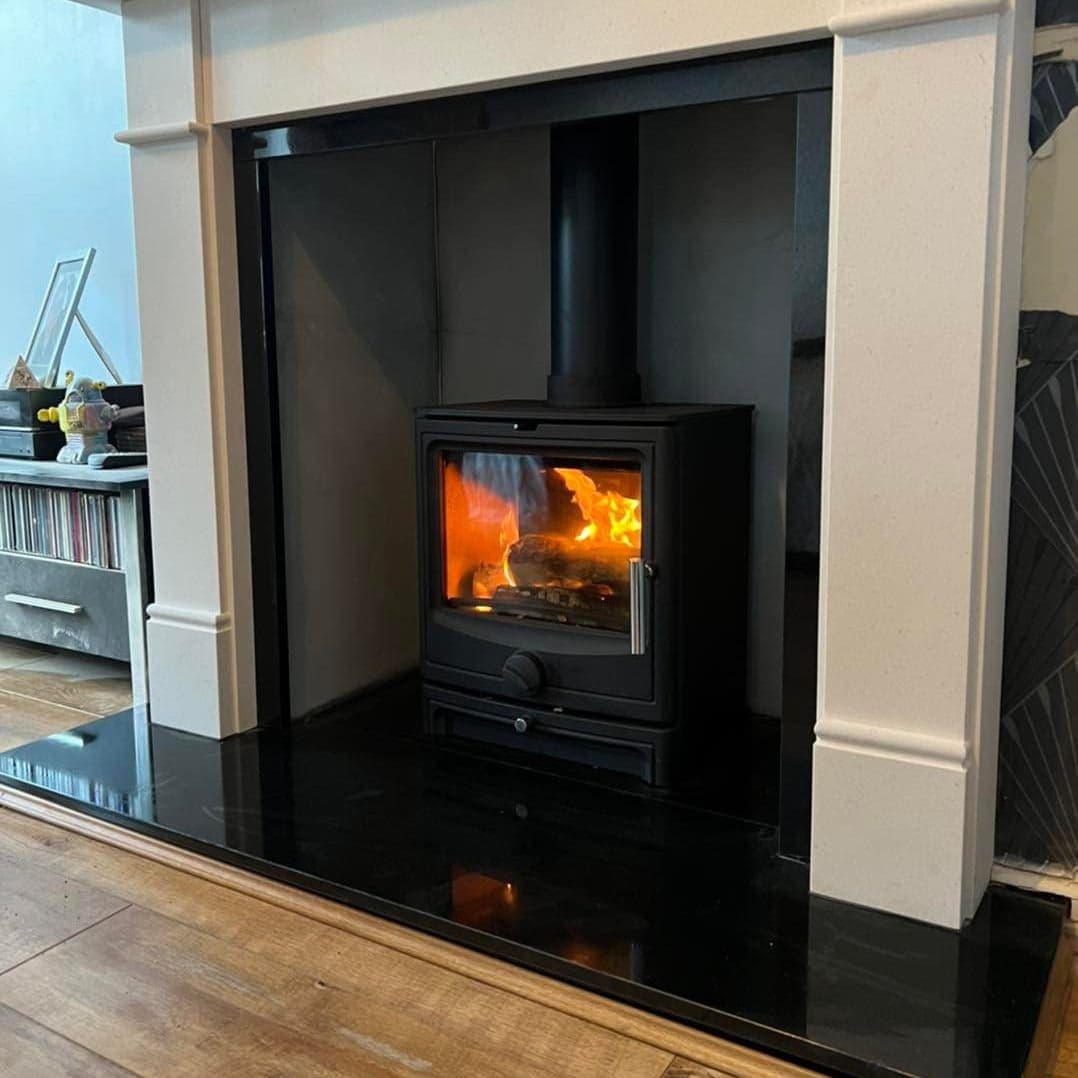
The clocks have gone back, the evenings are drawing in and it will not be long before your stove is lit most nights. After months of standing idle, a little preparation now makes all the difference to how safely and efficiently it performs through the coldest weeks of the year.
This winter stove checklist walks you through everything to tick off before the first big freeze: the professional checks worth booking, the quick jobs you can do yourself and how to make sure your fuel is ready to burn. It is written mainly for wood burner and multi-fuel stove owners, with a dedicated section for gas stoves too.
Your Winter Stove Checklist at a Glance
| Task | Why It Matters | Who Does It |
|---|---|---|
| 1. Chimney sweep | Removes soot, tar and debris, reduces chimney fire risk and provides an insurance certificate | Professional |
| 2. Check for nests and blockages | A blocked flue can push smoke and carbon monoxide back into the room | Professional |
| 3. Stove service | Catches worn seals, warped parts and stiff controls before they cause problems | Professional |
| 4. Door rope seals | Leaky seals let in extra air, so the stove burns too fast and loses control | DIY check |
| 5. Glass and airwash | Cracked glass is a safety risk, and a blocked airwash stops the glass staying clear | DIY check |
| 6. Baffle, firebricks and grate | Damaged parts reduce efficiency and can expose the stove body to excess heat | DIY check |
| 7. Carbon monoxide alarm | Your early warning against an invisible, odourless gas | DIY check |
| 8. Dry logs | Wet wood produces less heat, more smoke and more tar in the chimney | DIY |
| 9. Log store and kindling | Keeps fuel dry and ready all winter | DIY |
| 10. Smoke control area status | Confirms you are burning the right fuel in the right stove | DIY |
| 11. Ash and tools | A clean start helps the stove draw properly on the first fire | DIY |
| 12. Test burn | Confirms everything is working before you rely on it | DIY |
Before You Light Up: The Professional Checks
1. Book Your Chimney Sweep
This is the single most important job on the list. Over a season of burning, soot and tar build up inside your flue. Left in place, these deposits restrict the draw of your stove and can ignite, causing a chimney fire. A professional sweep clears them out and confirms your chimney is drawing properly.
Our chimney sweep service is a fixed price of £80, covering a thorough sweep, a visual inspection, a smoke draw test and a formal certificate that many home insurers ask for. Not sure how often you need one? Our guide to how often you should sweep your chimney explains the recommended frequency for different fuels.
Sweep diaries fill quickly once the weather turns, so it pays to book as early in the autumn as you can.
2. Check for Birds’ Nests and Blockages
Jackdaws and other birds love to nest in chimney pots during spring, and a summer of disuse gives them plenty of time to build. A nest can block the flue completely, which is extremely dangerous when the stove is lit.
Your sweep will check for blockages and advise on safe removal. Nests being built or used are protected by law, whatever the month. A professional must confirm a nest is no longer active before removing it and can advise on a suitable bird guard or cowl.
3. Book a Stove Service
A yearly stove maintenance visit keeps your stove safe, efficient and looking its best. Our HETAS registered engineers inspect the stove body and firebox, door seals, glass, grate, baffle plate and air controls, and work on all major brands, whether we installed your stove or not. Maintenance starts from £100, and it can usually be booked alongside your chimney sweep so everything is done in one visit.
Many home insurers also expect evidence of regular servicing, so it is worth keeping your service record somewhere safe.
Quick Checks You Can Do Yourself
Make sure your stove is completely cold before carrying out any of these checks.
4. Test the Door Rope Seals
The fire rope around the door and glass keeps your stove airtight, which is what lets you control the burn rate. Over time it compresses and hardens.
Try the paper test: close the door on a strip of paper at several points around the frame. If the paper slides out easily anywhere, the seal is no longer gripping and needs replacing. A worn seal is one of the most common reasons a stove burns through logs too quickly.
5. Check the Glass and Airwash
Look closely for any cracks or chips in the glass. Even a small crack should be dealt with before you light the stove, as glass can fail under heat. Give the glass a thorough clean and make sure the airwash vent, usually above the door, is clear of ash and debris. Our guide on how to clean a log burner covers glass, ash and baffle plates step by step.
6. Inspect the Baffle Plate, Firebricks and Grate
The baffle plate sits at the top of the firebox and directs heat and gases before they leave the stove. Check it is seated correctly and not badly warped. Follow your stove manufacturer’s guidance on firebrick cracks. Have damaged, crumbling or incomplete bricks assessed before use, particularly if the stove body is exposed. On multi-fuel stoves, make sure the riddling grate moves freely.
7. Test Your Carbon Monoxide Alarm
Press the test button on your carbon monoxide alarm and replace the batteries if needed. Check the expiry date printed on the back too: most alarms need replacing after a set number of years. The alarm should be in the same room as your stove.
Know the signs of carbon monoxide poisoning
Carbon monoxide has no colour, smell or taste. Early symptoms include headaches, dizziness, nausea, tiredness and breathlessness, and they often ease when you leave the room.
If your alarm sounds or you suspect carbon monoxide, get everyone outside immediately. Stop using the appliance if it is safe to do so, but do not delay leaving. Call the National Gas Emergency Service on 0800 111 999 from outside and do not re-enter until advised it is safe. NHS guidance says to call 111 if you think you have symptoms, or 999 for serious symptoms such as breathing difficulty, sudden confusion, collapse or chest pain.
Getting Your Fuel Ready
8. Stock Up on Dry, Ready to Burn Logs
Good fuel is the secret to a clean, hot fire. Logs should have a moisture content of 20% or below. Wetter wood wastes energy driving off water, produces more smoke and deposits more tar in your chimney.
-
Use a moisture meter: split a log and test the fresh face for an accurate reading.
-
Look for the Ready to Burn mark when buying logs for immediate use, which certifies a moisture content of 20% or less.
-
Choose the right species: dense hardwoods such as oak, ash and beech burn longer and hotter.
Weighing up your options? Our guide to kiln dried vs seasoned logs explains the differences in moisture, cost and storage.
9. Sort Your Log Store and Kindling
Even the driest logs will reabsorb moisture if they are left exposed. Before winter, check your log store is in good shape:
-
Keep logs raised off the ground on a slatted base or pallet
-
Cover the top from rain, but leave the sides open so air can circulate
-
Stack logs loosely rather than packing them tightly
-
Bring a day or two of logs indoors before use so they are at room temperature
-
Keep a dry supply of kindling and natural firelighters close at hand
10. Check Your Smoke Control Area Status
Much of London and many towns across Essex and Kent are designated smoke control areas. If you live in one, you must use a DEFRA exempt stove when burning wood, or burn an authorised smokeless fuel. Councils can issue penalties of up to £300 for smoke emissions from chimneys in these areas.
You can check your address on the DEFRA smoke control area map or with your local council. All of the wood and multi-fuel stoves we supply are DEFRA approved and EcoDesign compliant, so if you are thinking of replacing an older stove, we can advise on a suitable model.
Fuel rules apply everywhere
Wherever you live in England, firewood sold in volumes under two cubic metres must be certified Ready to Burn, and house coal can no longer be sold for domestic burning. Never burn treated or painted timber, household waste or packaging in your stove.
The First Fire of the Season
11. Clear Out the Ash and Check Your Tools
Start the season with a clean firebox. On a wood burner, empty most of the old ash but leave a thin layer on the base, as wood burns well on a shallow ash bed. On a multi-fuel stove, empty the ash pan fully so air can reach the fire from below. Check your companion set, gloves and ash carrier are all ready to use, and only ever dispose of ash in a metal container once it is completely cold.
12. Do a Small Test Burn
Light a small fire with plenty of kindling and open the air controls fully. A slight smell for the first few minutes is normal as dust burns off the stove body. Watch for the following:
-
Smoke should travel up the flue, not spill into the room
-
The fire should catch quickly and burn brightly
-
The glass should stay reasonably clear once the stove is up to temperature
-
Air controls should move smoothly and change the burn rate
If smoke comes back into the room, stop adding fuel, leave the room and do not use the stove again until it has been checked. Do not stay inside waiting for the fire to die down. If the CO alarm sounds or anyone feels unwell, follow the emergency advice above. Our guide to the signs your chimney needs sweeping explains what to look out for.
Have a Gas Stove? Your Winter Checks
Gas stoves need far less preparation, but they still deserve some attention before winter:
-
Book an annual service with a Gas Safe registered engineer before the cold weather arrives.
-
Sweep the chimney if your stove uses a conventional flue, to clear any debris or nests.
-
Replace the remote control batteries so the stove is ready when you need it.
-
Check the flame picture against your manufacturer’s instructions. Decorative fuel-effect gas fires can normally have yellow flames. New sooty marks, an abnormal flame pattern or a pilot that repeatedly goes out mean you should stop using the appliance and contact a Gas Safe registered engineer. See the Gas Safe Register safety guide.
-
Keep vents clear: never block any air vents installed for your appliance.
-
Test your carbon monoxide alarm, exactly as you would with a wood burner.
Thinking about switching fuel? Our comparison of gas stoves vs wood burners sets out the pros and cons of each.
Stay Safe Through the Season
-
Use a fireguard if you have young children, older relatives or pets in the home
-
Keep furniture, clothes airers, rugs and log baskets a safe distance from the stove
-
Never use petrol, paraffin or other flammable liquids to light the fire
-
Avoid overloading the firebox or running the stove at full output for long periods
-
Keep the door closed during normal operation; only open it for lighting or refuelling as the manufacturer instructs.
For more advice, read our stove safety tips for new owners.
Explore Our Aftercare Services
Chimney Sweep Service: a thorough sweep with smoke draw test and certificate across Essex, London and Kent. Fixed price of £80.
Stove Maintenance Service: a full check of seals, glass, baffle plates and air controls on all makes and models. From £100.
Maintenance and Chimney Sweep Overview: book your sweep and stove service together in one convenient visit.
Winter Stove Preparation FAQs
When should I get my chimney swept before winter?
Ideally in late summer or early autumn, before you start using the stove regularly. If you have not booked yours yet, do it as soon as possible, as sweeps get much busier once the weather turns cold.
How do I know if my stove door seal needs replacing?
Close the stove door on a strip of paper at several points around the frame. If it slides out easily, the rope seal has lost its grip and should be replaced. Other signs include a fire that is hard to control or burns through logs unusually quickly.
Can I sweep my own chimney?
It is possible, but a professional sweep is strongly recommended. A sweep will also check the draw and condition of your flue, and many home insurers require a certificate from a professional sweep, which you cannot provide yourself.
How long do carbon monoxide alarms last?
Most carbon monoxide alarms last between five and ten years, depending on the model. Check the expiry date on the back of your alarm and test it regularly using the test button.
What moisture content should my logs be?
Logs should be at 20% moisture or below. You can check with a moisture meter on a freshly split face, or buy logs carrying the Ready to Burn mark, which certifies that they meet this standard.
Do gas stoves need preparing for winter too?
Yes, though there is less to do. Book an annual service with a Gas Safe registered engineer, sweep the chimney if it uses a conventional flue, replace the remote batteries and test your carbon monoxide alarm.
Get Your Stove Winter Ready with Lux Woodburners
Let our HETAS registered team take care of the important checks, so you can relax in front of the fire all winter long. We cover Essex, Kent and London for chimney sweeping and stove maintenance. Book your visit online or call your nearest showroom today.
Essex Showroom (Leigh-on-Sea): 01702 780 888
Kent and London Showroom (Orpington): 01689 477 888