

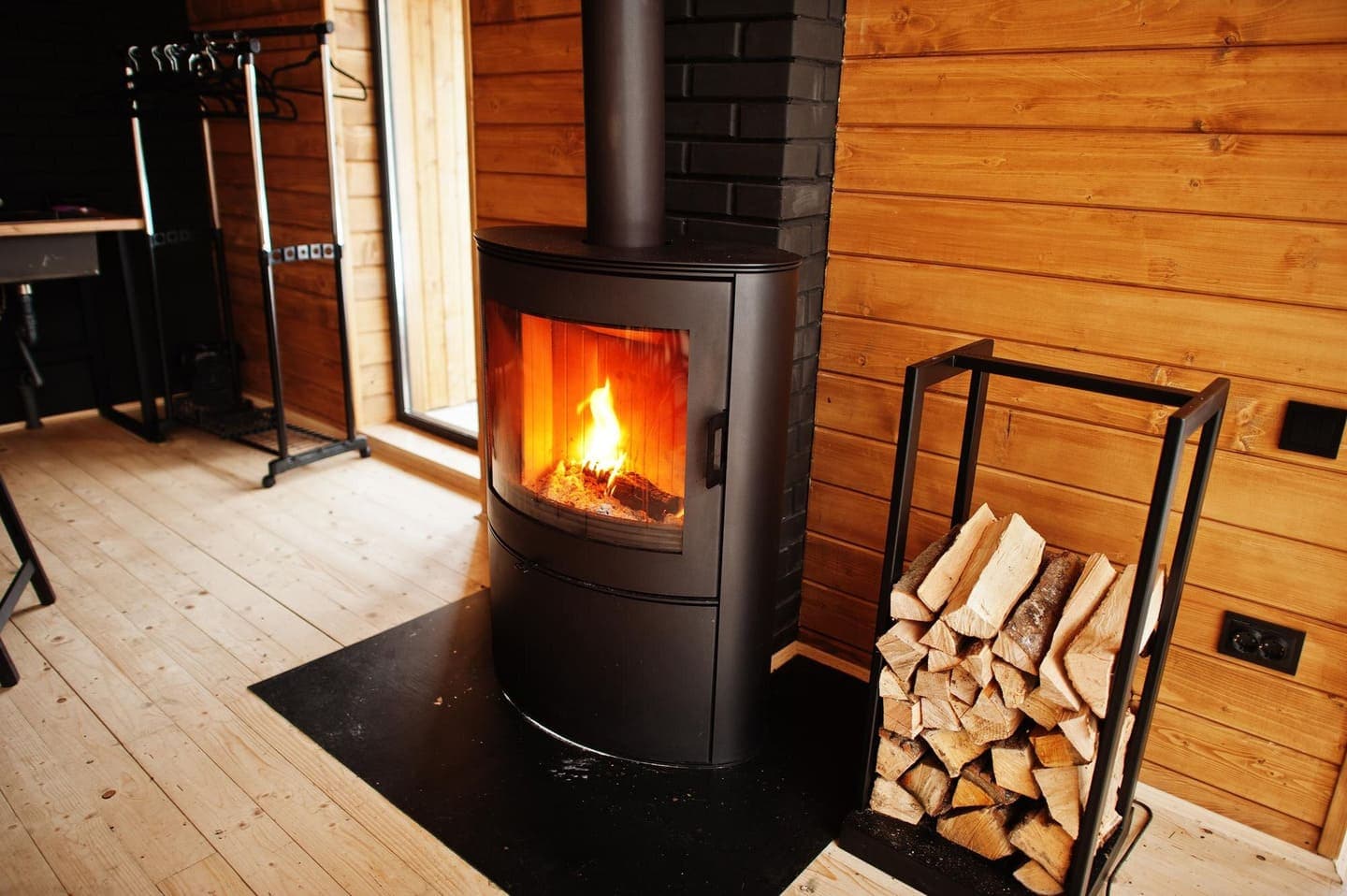
One of the most common questions we hear from homeowners considering a stove is whether a chimney is essential. It is an easy assumption to make, particularly in newer homes or extensions that were never built with one, but it is not actually the barrier many people expect.
The Short Answer: Yes, in Most Cases
A wood burning stove can be installed in the vast majority of homes without an existing chimney, using a twin wall flue system in place of a traditional masonry chimney. This route is well established, fully compliant with building regulations when installed correctly, and opens up stove ownership to homes that would otherwise miss out entirely.
What Is a Twin Wall Flue System?
A twin wall flue is a factory-made, double-skin stainless steel pipe with an insulating layer between the inner and outer walls. It performs the same job as a traditional chimney, safely venting smoke and gases away from the stove and out above the roofline, but without needing any existing masonry structure.
Because it is a manufactured, modular system, a twin wall flue can be routed through a variety of paths depending on the layout of your home, making it a flexible solution for houses of almost any age or style.
How Installation Works Without an Existing Chimney
There are two common routes for fitting a twin wall flue in a home without a chimney.
Straight up through the ceiling and roof: The flue runs vertically from the stove, through the room above and out through the roof, finished with a weatherproof flashing plate to keep the loft and roof space sealed.
Up and out through an external wall: The flue passes through an external wall on a rising route before continuing vertically up the outside of the property, a useful option where routing through upper floors is not practical. The installer designs the route and bends to meet the appliance and flue manufacturer's requirements.
Either route requires careful planning around clearances to combustible materials such as joists and roof timbers, along with a structural check to confirm the chosen path is suitable. This is exactly the kind of assessment our HETAS-registered installers carry out as part of every no-chimney installation.
Which Homes Are Suitable?
Twin wall flue installations work particularly well in the following situations.
-
New builds and modern homes that were never constructed with a chimney breast.
-
Extensions, garden rooms and conservatories where a stove is wanted but no flue route exists.
-
Older homes where the original chimney has been removed or is not suitable for reuse.
-
Any room where you would like a stove in a location away from an existing chimney breast.
Freestanding stoves are generally the best fit for a twin wall flue installation, since they offer more flexibility in positioning than inset models. You can browse our full range on the freestanding stoves page.
Building Regulations and Sign Off
A twin wall flue installation still falls under Building Regulations, specifically the requirements covering combustion appliances and fuel storage systems. When you use a HETAS-registered installer, this sign off is handled as part of the process, known as self-certification, meaning you do not need to arrange separate building control approval yourself. Every installation includes the correct compliance documentation once complete.
Twin Wall Flue vs Traditional Chimney: What's the Difference in Practice?
| Factor | Twin Wall Flue System | Traditional Masonry Chimney |
|---|---|---|
| Requires existing masonry chimney | No | Yes |
| Typical installation time | Often completed within a day, depending on route | Can involve more extensive work if lining or repairing an existing chimney |
| Flexibility of stove position | High, can be routed to suit most room layouts | Limited to the location of the existing chimney breast |
| Heat and draw performance | Excellent when correctly sized and installed | Excellent, though older or oversized chimneys may need lining |
| Suitable building types | New builds, extensions and homes without a chimney | Homes with an existing, sound chimney structure |
In terms of day-to-day performance, a well-installed twin wall flue system draws and heats just as effectively as a traditional chimney. The main practical difference is in how the installation itself is carried out.
What About the Cost?
Costs vary depending on the length and route of the flue run, the stove chosen and any structural work needed to pass safely through the roof or wall. Our full installation packages include twin wall options and explain what is included, giving you a clearer idea of what to budget for before requesting a quote.
Book a No-Chimney Installation Consultation
If you have been holding off on a stove simply because your home does not have a chimney, it is worth having a conversation with our team. We assess every property individually and can usually find a suitable route for a twin wall flue installation.
Essex: 01702 780 888 · Kent & London: 01689 477 888
Explore Related Pages
A no-chimney installation is just the start. Take a look at the pages below to plan the rest of your stove project:
See how our full supply and installation process works from initial consultation through to completion.
Explore our complete installation package, covering everything from the stove to the flue system.
Browse freestanding stoves, the most flexible option for a twin wall flue installation.
No-Chimney Wood Burner Installation FAQs
Do I need planning permission for a twin wall flue?
In most cases, no, since this type of work generally falls under permitted development. Listed buildings or homes in conservation areas may have additional restrictions, so it is worth checking with your installer if this applies to your property.
Can a twin wall flue go up an external wall instead of through the roof?
Yes, this is a common and practical alternative, particularly where routing through upper floors is not straightforward. The flue exits through the rear wall and is then routed vertically up the outside of the property.
Is a stove without a chimney as efficient as one with a traditional chimney?
Yes, when correctly sized and installed, a twin wall flue performs just as well as a traditional masonry chimney in terms of draw and heat output. The insulated design helps maintain flue temperature effectively along its length.
How much roof or wall space does a twin wall flue need?
This depends on the specific route chosen and the height required to clear the roofline safely, which varies by property. Our installers assess this during a site visit as part of the quotation process.
Can I convert to a twin wall system if I already have a redundant chimney?
Yes, in some cases a twin wall flue can be run through an existing but unused chimney void, which can simplify the installation. Every property is assessed individually to confirm the best approach.
Does every stove work with a twin wall flue?
Most modern wood burning stoves are compatible with a twin wall flue system, provided the flue is correctly sized to the appliance. Our installers will confirm compatibility and the correct flue diameter as part of your consultation.
Ready to Explore Your Options?
Whether or not you have an existing chimney, our team can help you find the right installation route for your home. Book a free consultation with our Essex, London and Kent installers today.
Essex: 01702 780 888 · Kent & London: 01689 477 888