

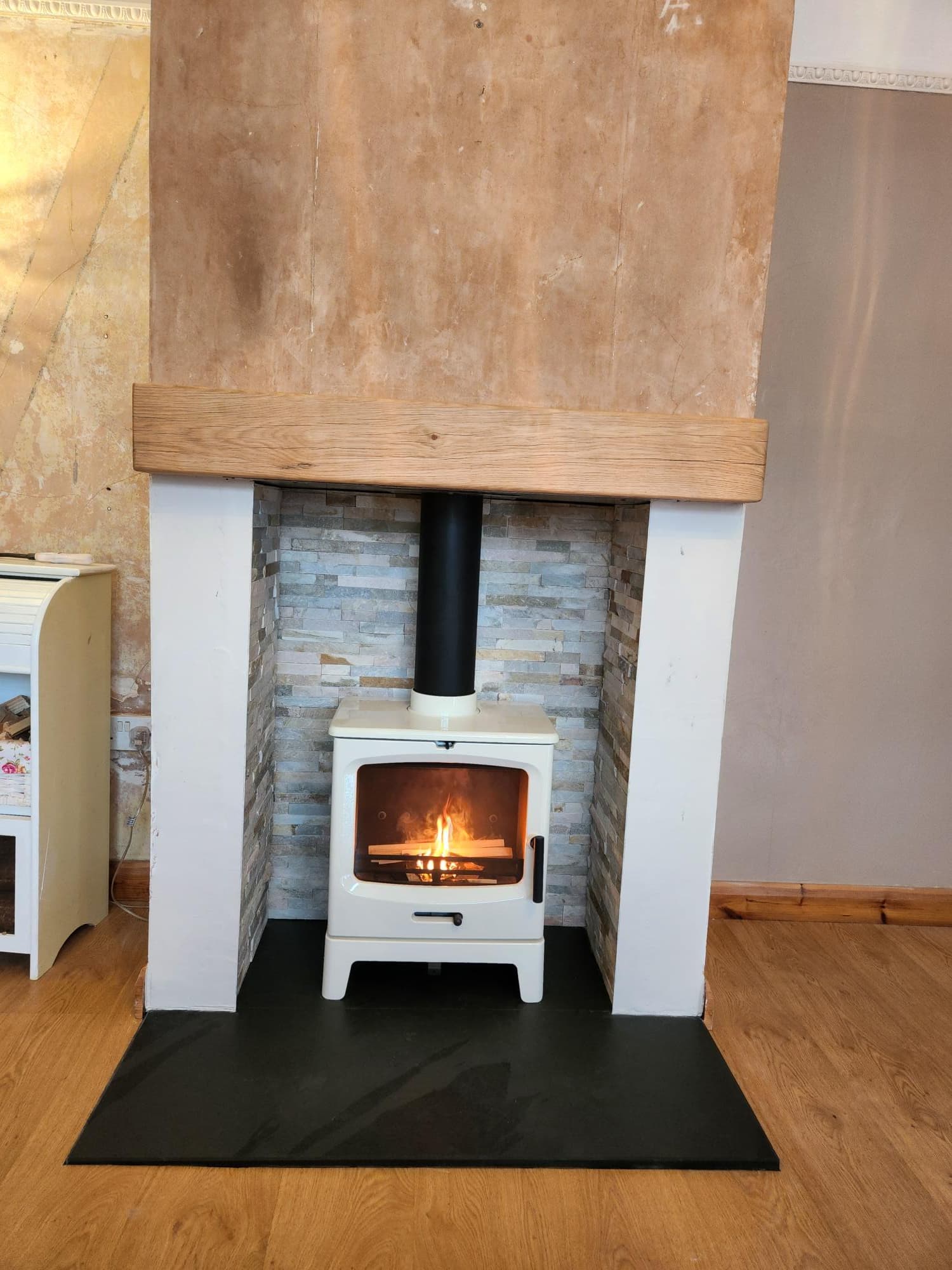
A clean chimney is one of the simplest things you can do to keep your stove safe and efficient, yet it is also one of the most commonly overlooked. Soot and creosote build up every time you light a fire, and left unchecked, this residue can restrict airflow, cause smoke to drift back into the room, and increase the risk of a chimney fire. So how often should a chimney actually be swept? The honest answer depends on what you burn and how often you use your stove, but there are clear, HETAS-backed guidelines to follow.
In this guide, we will cover the recommended sweeping frequency for different appliances and fuel types, the factors that can mean your chimney needs attention sooner, and the warning signs no homeowner in Essex, London or Kent should ignore.
How Often Does a Chimney Need Sweeping?
As a general guide, HETAS recommends sweeping twice a year when burning wood and at least annually for smokeless fuels. The table below is a starting point: follow your appliance manufacturer's instructions and your sweep's advice, as heavier use may require more frequent visits.
| Appliance / Fuel Type | Recommended Sweep Frequency |
|---|---|
| Wood burning stove (seasoned wood) | Twice a year, typically before and midway through the heating season |
| Wood burning stove previously used with wet wood | Ask a professional sweep to assess deposits; extra sweeping is not a substitute for switching to properly dried wood |
| Multi-fuel stove | Follow the schedule for the fuel used: twice a year for wood, at least annually for smokeless fuel |
| Open fire burning wood | Twice a year |
| Open fire burning smokeless fuel | Once a year |
| Gas stove or gas fire | Arrange annual servicing by a Gas Safe registered engineer, including appropriate flue checks |
| Oil-fired appliance | Follow the manufacturer's servicing and flue maintenance schedule with a qualified technician |
If your stove sits unused for long periods over summer and then works hard through a cold winter, a pre-season sweep in autumn is a sensible habit to build into your annual routine.
Why Sweep Frequency Depends on How You Use Your Stove
The table above is a starting point, but several factors can shift your chimney towards the more frequent end of the scale.
How often you burn: A stove used daily throughout winter will build up creosote far faster than one lit occasionally for ambience. Heavy users should lean towards the upper end of the recommended frequency.
The wood you burn: Wet or unseasoned wood burns at a lower temperature and produces significantly more smoke and creosote than kiln-dried or properly seasoned hardwood. Logs above 20% moisture content can cause deposits to build up faster. Use properly dried logs at 20% moisture content or below.
The age and type of your flue: Older brick chimneys and certain flexible flue liners can be more prone to build-up than a modern, well-insulated twin wall system, particularly if the chimney is unlined or oversized for the stove.
How the stove is operated: Running a stove with the air controls closed down too far, sometimes called slumbering, causes incomplete combustion and faster soot and creosote deposits, even with good quality fuel.
What Happens If You Do Not Sweep Regularly
Skipping a sweep is rarely dramatic in the short term, which is exactly why it catches people out. The risks build quietly over successive burns.
-
Creosote build-up increases the risk of a chimney fire, which can spread rapidly and cause serious structural damage.
-
A restricted flue reduces draw, causing smoke and fumes to spill back into the room rather than venting correctly.
-
Poor ventilation raises the risk of carbon monoxide entering your home, particularly dangerous as it is colourless and odourless.
-
Your stove will burn less efficiently, producing less heat from the same amount of fuel and increasing running costs.
-
Your home insurance policy may set maintenance or certification requirements. Check your own policy and keep your sweep certificates.
Signs Your Chimney May Need Sweeping Sooner
Alongside a regular annual or twice-yearly schedule, watch for these warning signs between visits. Any of the following is a good reason to book a sweep ahead of your usual date.
-
A persistent smoky or sooty smell in the room, even when the stove is not lit.
-
Smoke drifting back into the room instead of drawing up the chimney.
-
Dark, tarry deposits visible around the stove door or on the glass.
-
A noticeably weaker or more sluggish draw than usual.
If smoke enters the room or you notice poor draw, stop using the stove and arrange a professional inspection before using it again.
Suspected chimney fire: A loud roaring noise, sparks or flames from the chimney, or unusual sounds accompanied by heat or smoke can indicate a fire. Get everyone out and call 999. Do not wait for a routine sweep appointment. See Essex County Fire and Rescue Service's chimney fire advice.
What Happens During a Professional Chimney Sweep
A thorough sweep involves more than simply clearing soot. Our HETAS-registered engineers carry out a full chimney or flue sweep, a visual inspection of the flue and stove for wear or damage, and a smoke draw test to confirm the system is venting correctly. A formal sweep certificate is issued after every visit, giving you a clear record for insurance purposes.
You can find full details of what is included on our dedicated chimney sweep page, linked below.
Chimney Sweep Service (Essex, London and Kent)
Booking Your Chimney Sweep in Essex, London or Kent
Whether you are due your twice-yearly sweep or you have spotted one of the warning signs above, Lux Woodburners offers a fixed-price chimney sweep across Essex, South East London and Kent, carried out by HETAS-registered engineers with a certificate included as standard.
£80 per sweep, inclusive of VAT, covering Essex, London and Kent.
Essex: 01702 780 888 · Kent & London: 01689 477 888
Explore Our Additional Aftercare Services
Keeping your chimney clean works best as part of a complete stove care routine. Take a look at our other aftercare services below:
Our HETAS-registered engineers carry out thorough stove servicing across Essex, London and Kent, covering door seals, glass, baffle plates and air controls. From £100.
Firewood & Log Delivery (Essex)
Burning the right wood is one of the easiest ways to slow creosote build-up between sweeps. We supply kiln-dried and seasoned hardwood logs, delivered direct to your door across Essex. From £12.
Maintenance & Chimney Sweep Overview
See all our aftercare services, including chimney sweeping, stove maintenance and log supply, in one place.
Chimney Sweeping Frequency FAQs
Do I really need to sweep my chimney twice a year?
For a wood burning stove used regularly through the winter, twice a year is the standard recommendation, ideally once before the heating season begins and again partway through. For smokeless fuel, the usual minimum is once a year. Follow your manufacturer's instructions and your sweep's advice on whether your usage calls for more frequent visits.
Can I sweep my own chimney?
While DIY sweeping kits exist, a professional sweep includes a visual inspection and smoke draw test that a homeowner cannot easily replicate. A professional visit also provides a formal certificate as a record of maintenance. Check your insurance policy for its specific requirements.
What happens if I burn wet wood between sweeps?
Wet or unseasoned wood produces significantly more smoke and creosote than properly dried logs, meaning your chimney will need sweeping more frequently. Switching to kiln-dried or seasoned hardwood is one of the simplest ways to reduce build-up and extend the time between visits.
Does a new stove installation still need regular sweeping?
Yes. Even a newly installed stove and flue system will accumulate soot and creosote with use, so the same sweeping schedule applies from the very first season.
How do I know if my chimney needs sweeping urgently?
Smoke drifting back into the room or a strong sooty smell calls for a prompt inspection. Stop using the stove until it has been checked. If you suspect a chimney fire, get everyone out and call 999; do not wait for our team or a sweep appointment.
Do you provide a certificate after every sweep?
Yes. Every chimney sweep carried out by Lux Woodburners includes a formal certificate confirming the date, scope of work and engineer details, suitable for insurance purposes.
Book Your Chimney Sweep Today
Regular sweeping is one of the simplest ways to keep your stove safe and efficient, with a certificate to document its maintenance. Our HETAS-registered team covers Essex, South East London and Kent, with a fixed price and certificate included on every visit.
Essex: 01702 780 888 · Kent & London: 01689 477 888